ModelBriefs · DeepSeek-V4-Flash · Graphics · Seedream-4.0
← Labs / 03
Physical AI company8 papers · 2024–2026
vision-language-actionrobot learningmanipulation
Official research index↗Physical Intelligence
A research-first company publishing generalist policies trained across robots and tasks.
No.Paper · what it does and showsIndustry contribution
01
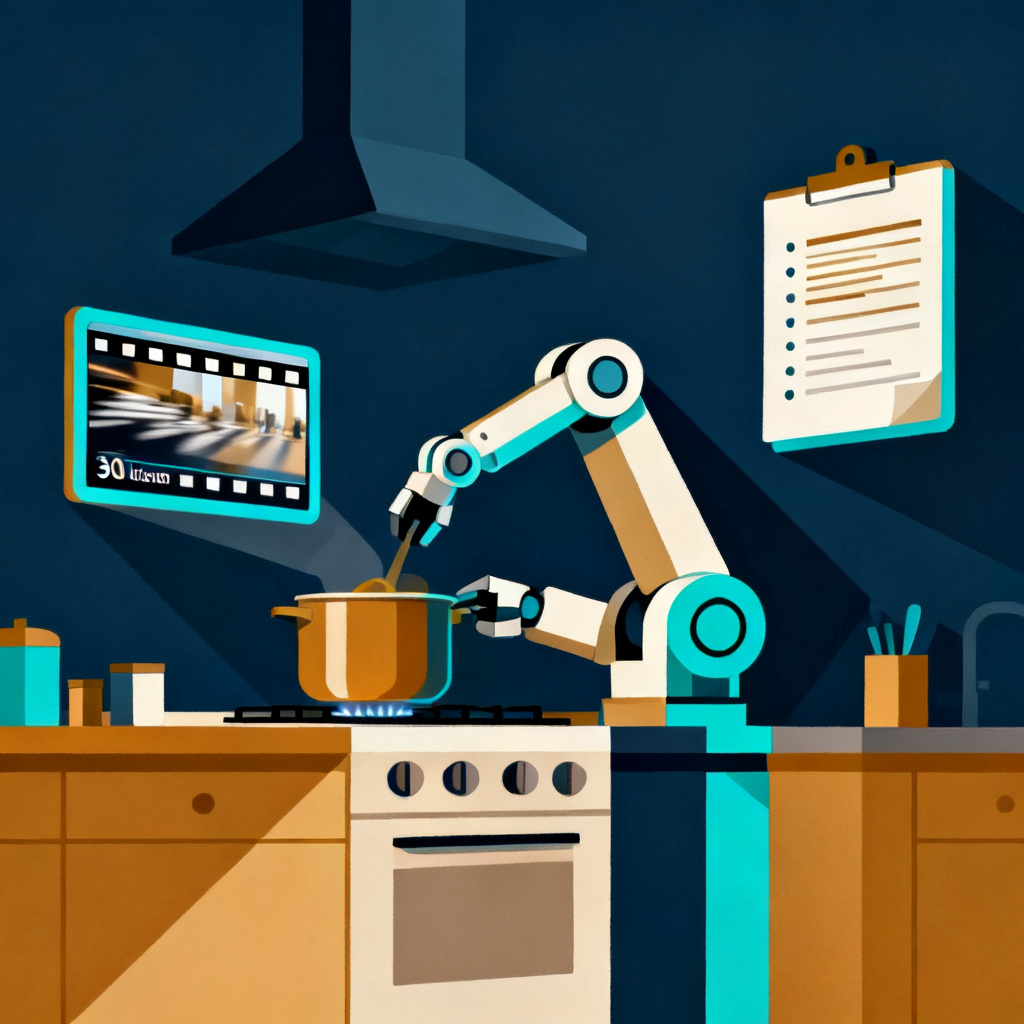
VLAs with Long and Short-Term Memory2026 ↗
Multi-scale Embodied Memory keeps short-horizon video history and long-horizon language summaries that the model chooses to store, enabling tasks up to 15 minutes long and in-context recovery from earlier mistakes.
Lifts the short-task ceiling on robot policies, a prerequisite for commercial cleaning, service and kitchen jobs that run for many minutes without resets.
02
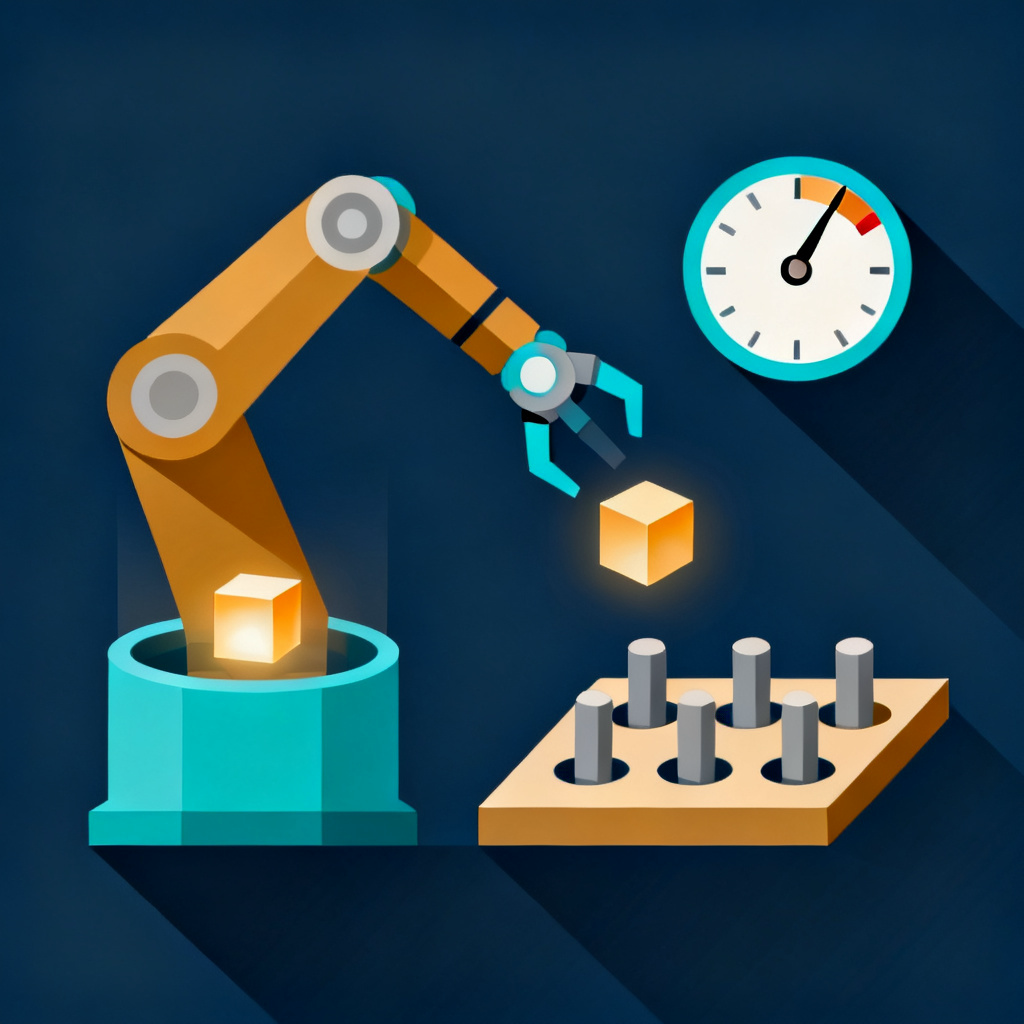
Precise Manipulation with Efficient Online RL2026 ↗
RL tokens summarize the VLA’s internal state into a compact interface, letting a tiny on-robot actor-critic learn online and speed up the most precise phases of tasks by up to 3x from about 15 minutes of real data.
Lets deployed robots improve the last millimetre of precision tasks on the line or jobsite instead of shipping hardware back to a research lab.
03
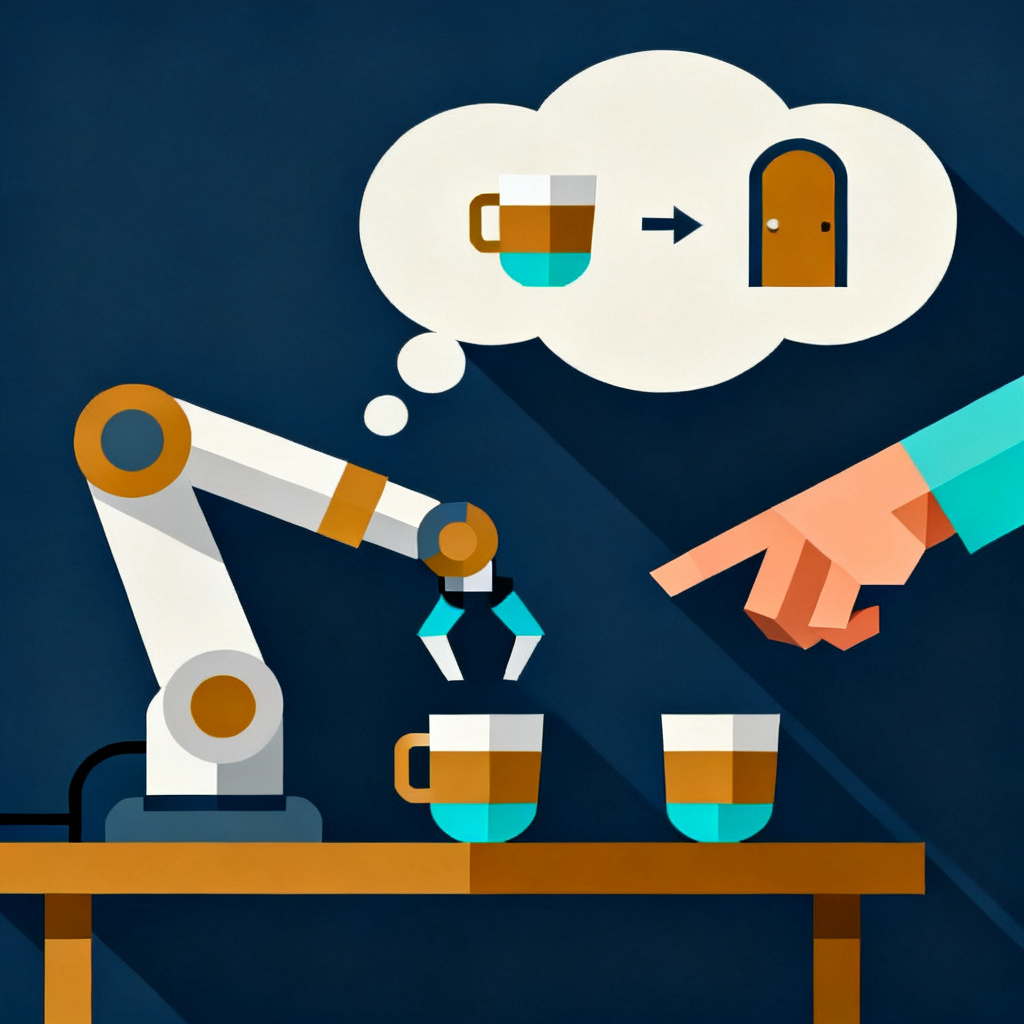
Teaching Robots to Listen and Think Harder2025 ↗
Hi Robot is a two-level system: a high-level VLM breaks complex prompts and live corrections into single steps "whispered" to the π0 low-level policy, trained partly on synthetically labelled interactions.
Laid out the recipe for conversational robot assistants that handle multi-stage requests and mid-task human corrections, the interaction model service and retail robots now ship with.
04
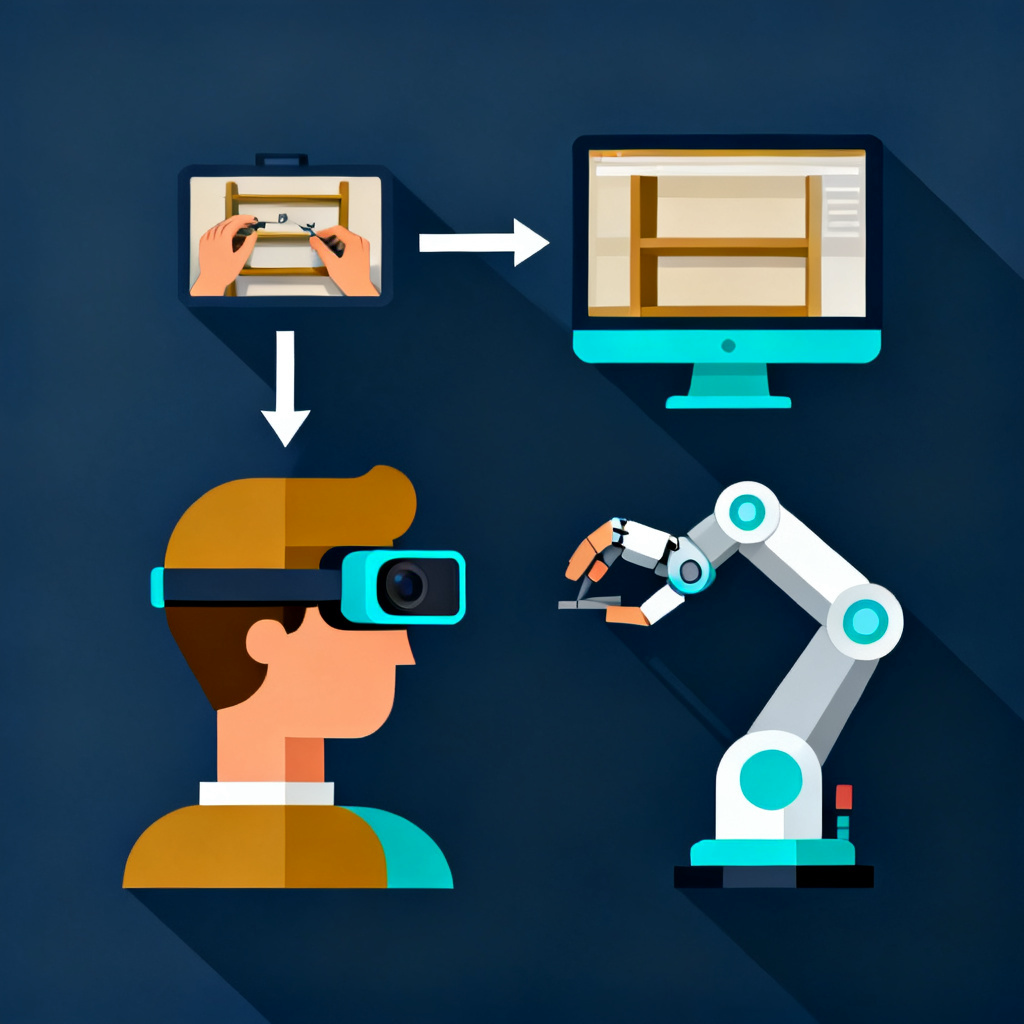
Emergence of Human to Robot Transfer in VLAs2025 ↗
Shows that simply co-fine-tuning a scaled VLA on egocentric human video transfers to robot behavior, and that this ability emerges as robot pretraining data grows, giving up to 2x improvement where robot data is scarce.
Turns cheap wearable human video into a usable industrial data source, shrinking how much expensive robot teleoperation a deployment needs to cover a new task.
05
VLAs that Train Fast, Run Fast, and Generalize Better2025 ↗
Knowledge insulation stops gradients from newly added continuous action experts from overwriting the VLM backbone, so the model trains as fast as tokenized VLAs while keeping web-scale semantic knowledge.
Gives robot teams faster VLA training plus better language following in unseen environments, a direct cost and reliability win for deployed manipulation.
06
Real-Time Action Chunking with Large Models2025 ↗
Real-time chunking lets diffusion- and flow-based VLAs generate the next action chunk while the previous one is still executing, with no training-time changes and without the discontinuities that break naive smoothing.
Allows remote or on-robot VLA inference with 100-300 ms of latency while keeping industrial cycle times intact as models keep growing.
07
π0: A Vision-Language-Action Flow Model for General Robot Control2024 ↗
A roughly 3B-parameter vision-language-action model that adds a flow-matching action expert to a pretrained VLM and is fine-tuned to dexterous multi-robot tasks such as laundry folding and table bussing.
Introduced flow-matching action generation and became a licensable generalist robot brain that other companies adapt to their own hardware and task suites.
08
FAST: Efficient Robot Action Tokenization2024 ↗
Compresses continuous robot action chunks with a frequency-domain tokenizer so vision-language-action models can be trained autoregressively at high speed without losing dexterity.
Cut VLA training time and cost by roughly an order of magnitude, making fast action tokenization a standard ingredient in commercial robot models.