Illustration brief the model wrote
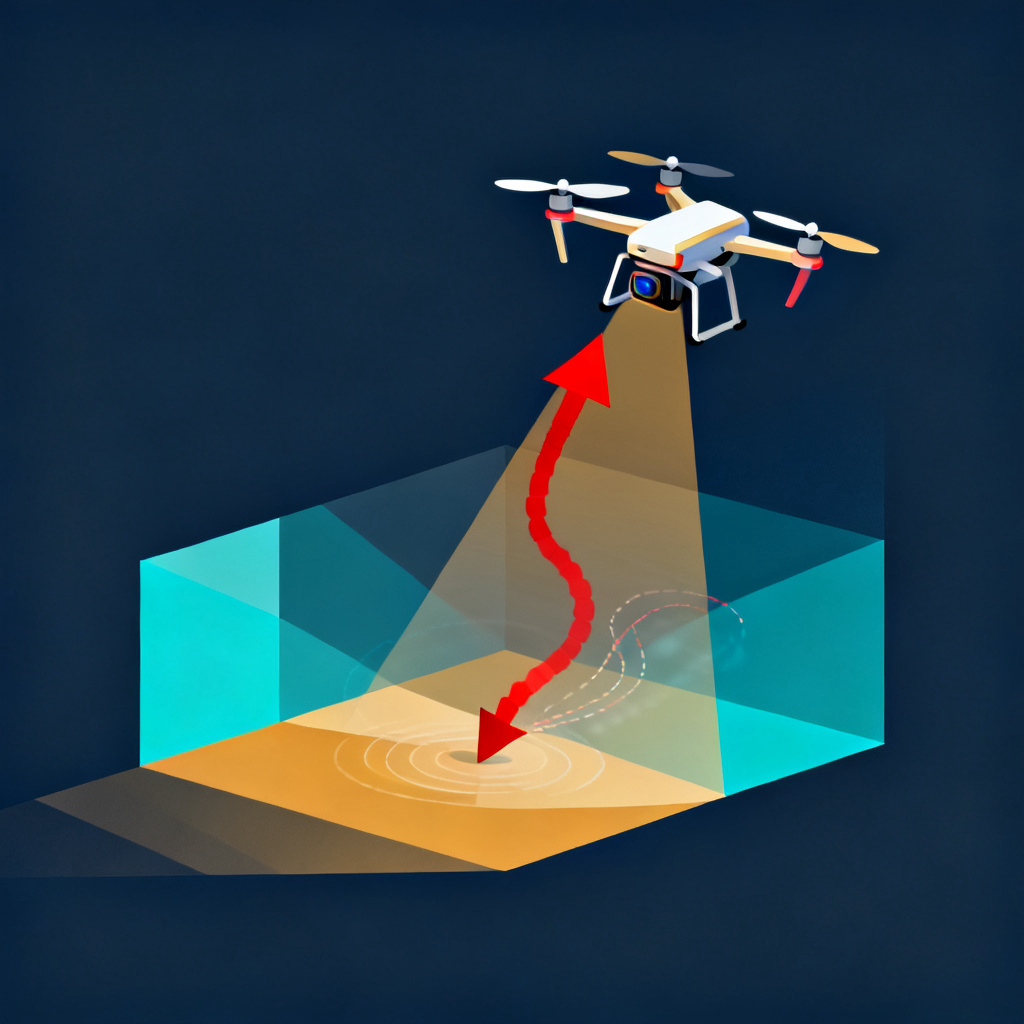
A small quadrotor drone in a stylized 3D simulation environment. A red arrow shows gradient backpropagation path from the drone's camera visual features through the simulator to the control outputs. The drone recovers from an upside-down position, with fading trajectory lines of previous failed attempts.
Learning Quadrotor Control From Visual Features Using Differentiable Simulation
Trains quadrotor recovery policies via differentiable simulation, learning from visual features in minutes.
What changed
ModelBefore, quadrotor control training relied on reinforcement learning with millions of samples or hand-tuned controllers. This paper introduces differentiable simulation for quadrotors, enabling gradient-based optimization directly from visual features, reducing training to seconds (state) or minutes (vision).
So what, in plain English
ModelA drone can now learn to recover from a flip by 'feeling' the gradient of each action, rather than crashing thousands of times. It's like learning to ride a bike by instantly knowing which way to lean after each wobble.
Contribution to industry
ModelThis enables drone developers to train robust recovery policies orders of magnitude faster, cutting simulation costs. Companies building autonomous drones for inspection, delivery, or cinematography can now deploy vision-based controllers with minimal trial and error. The method is directly applicable to other real-time control products requiring sample-efficient learning.
Typed judgments
Jev★★★☆☆ drones · Physical AI 98%
Real hardware 20% · Open code / data 9% · Foundation-model based 6% · Survey / benchmark-only 4%
Probabilities from TypeSafe Jev over the title, venue and abstract; the filters on the atlas apply code-owned thresholds to these numbers.
Editor's notes
Summary. Back-propagates gradients through a differentiable simulator to train quadrotor controllers, learning recovery policies in seconds from vehicle state and in minutes from visual features only.
Industry. Demonstrates that gradient-based simulation training can cut RL sample cost by orders of magnitude for drones and other real-time control products.