Illustration brief the model wrote
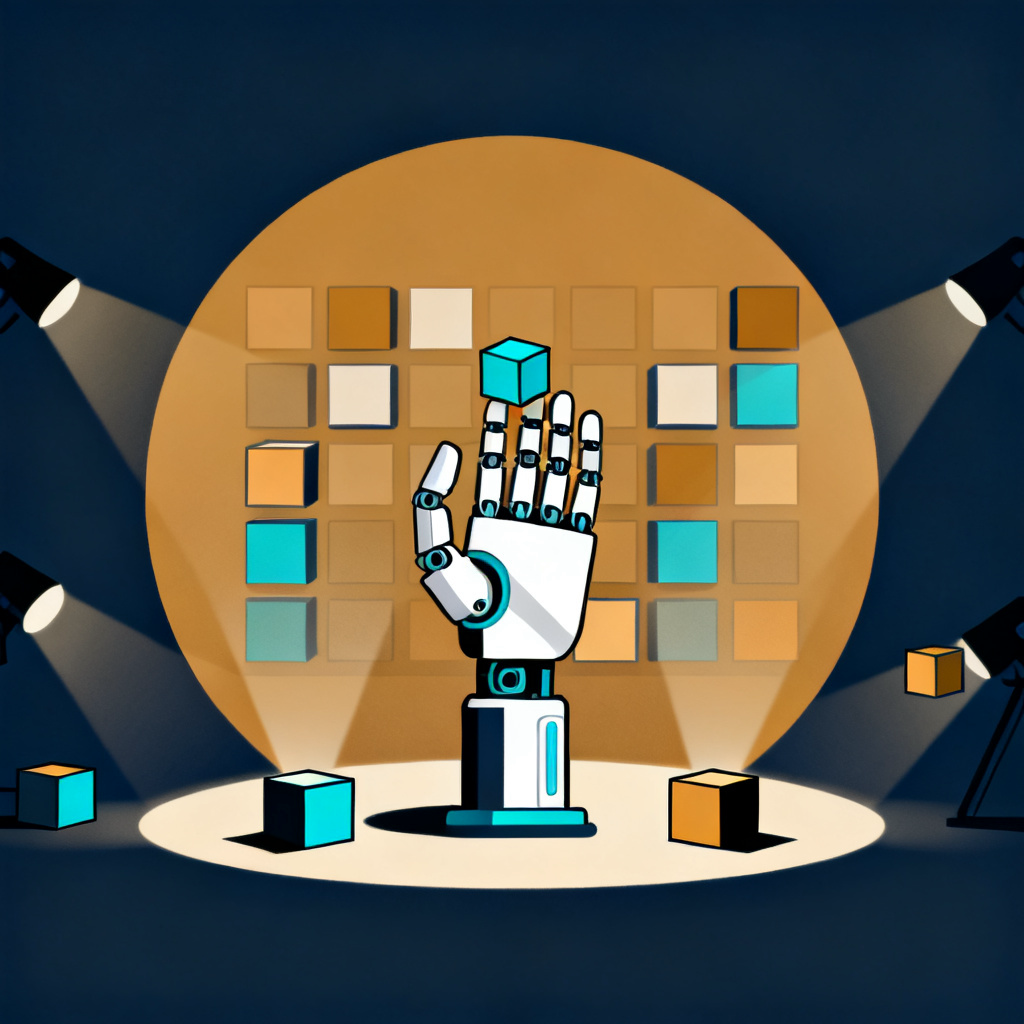
A robotic hand with multiple fingers picking up a small cube. Behind it, a grid of similar cubes in various colors. The hand is in the center, performing the task while a large circular spotlight illuminates it, with dimmer spotlights on other cubes, suggesting focus on one skill while others are learned in parallel.
A Careful Examination of Large Behavior Models for Multitask Dexterous Manipulation
Extends Diffusion Policy into Large Behavior Models for multitask dexterous manipulation, finding multitask pretraining improves success, robustness, and data efficiency.
What changed
ModelBefore this paper, Diffusion Policy was primarily a single-task model. This paper scales it to a multitask 'Large Behavior Model', showing through blinded randomized trials that multitask pretraining improves success rates and robustness while requiring less data per task.
So what, in plain English
ModelImagine teaching a chef many recipes at once instead of one at a time. This paper shows that learning multiple manipulation skills together makes the robot better at each individual skill, even with fewer practice attempts.
Contribution to industry
ModelThis paper provides a method for evaluating robot foundation models using blinded randomized trials instead of cherry-picked demo videos, which is a more rigorous standard for deployment. It shows that multitask pretraining with Diffusion Policy can improve data efficiency and robustness, which is valuable for companies deploying dexterous manipulation in logistics or manufacturing. Toyota Research Institute's approach offers a concrete way to compare robot models fairly.
Typed judgments
Jev★★★☆☆ manipulation · Physical AI 98%
Real hardware 93% · Open code / data 9% · Foundation-model based 47% · Survey / benchmark-only 14%
Probabilities from TypeSafe Jev over the title, venue and abstract; the filters on the atlas apply code-owned thresholds to these numbers.
Editor's notes
Summary. Extends Diffusion Policy into multitask Large Behavior Models and evaluates them through blind, randomized simulation and real-world trials, finding that multitask pretraining improves success, robustness and data efficiency.
Industry. Replaced demo-video evidence with blinded randomized trials as the bar for trusting robot foundation models, giving buyers a defensible method for evaluating them.